Democratic governance is built on a simple, non-negotiable principle: a government must be accountable to the people it serves. Laws should never be enacted based on political whim, ideological agendas or unverified assumptions. Instead, they must be anchored in verifiable evidence, rigorous research and a genuine commitment to the public good. When the state proposes legislation that directly impacts the fundamental rights of its citizens, the demand for clear unequivocal justification becomes absolute.
It is against this backdrop that Civil Society South Africa (“CSSA”) has officially launched the Transparency Project. This critical initiative is designed to compel government accountability and ensure that major public policy decisions are subjected to open scrutiny.
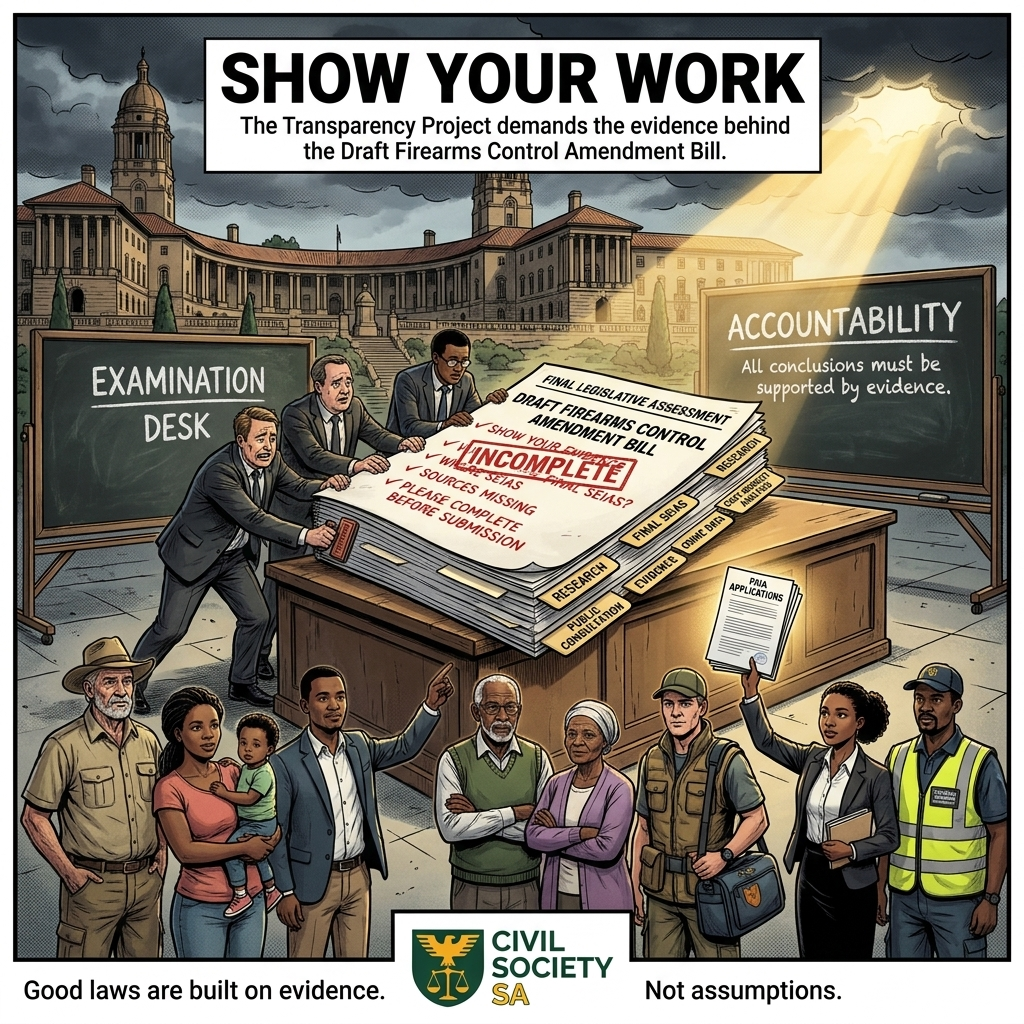
The Transparency Project has targeted the highly contentious Draft Firearms Control Amendment Bill (“FCAB”), a piece of legislation that seeks to eliminate self-defence as a valid reason for firearm ownership. By submitting comprehensive applications under the Promotion of Access to Information Act (“PAIA”) to the key state organs driving the Bill, CSSA is demanding that the state “show its work”.
This Project is not merely an intervention in the firearm debate, it is a vital stand for constitutional democracy, meaningful public participation and the preservation of citizen safety.
THE ORIGIN OF THE TRANSPARENCY PROJECT
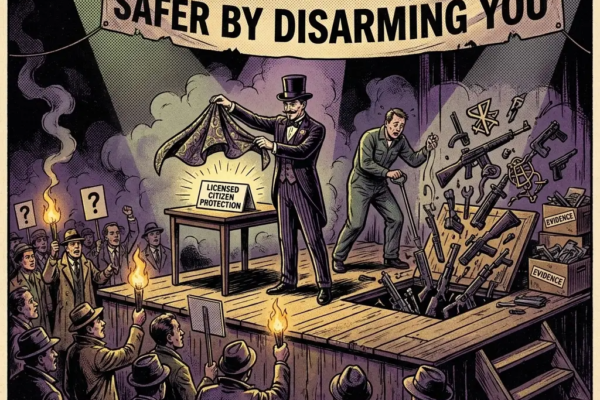
The FCAB represents one of the most radical shifts in public safety policy in South Africa’s democratic history. If passed, it will effectively disarm hundreds of thousands of law-abiding citizens who rely on legally acquired firearms to protect their lives, families and properties in a country currently living in a violent crime crisis.
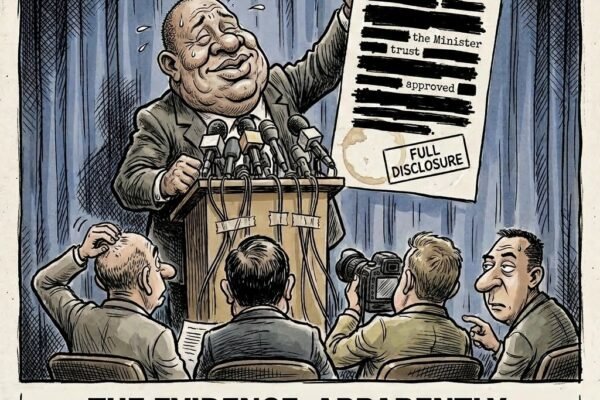
For years, state officials and anti-gun lobby groups have asserted that disarming legal firearm owners will magically lead to a safer society. However, these assertions have routinely been presented without the comprehensive, localised data required to back them up. The state has asked South Africans to accept a massive reduction in their personal security capabilities based entirely on trust.
The Transparency Project was born out of a refusal to accept policy by decree. The Project utilises the legal mechanisms provided by PAIA to demand access to the complete documentary record underpinning the proposed amendments. CSSA has targeted four key institutions central to the development of this bill. These institutions include:
- – The Civilian Secretariat for Police Service;
- – The South African Police Service (“SAPS”);
- – The Presidency; and
- – The Department responsible for the Socio-Economic Impact Assessment System (SEIAS).
Collectively, these legal applications seek unconditional access to every piece of documentation relied upon during the legislative process. This includes, but not limited to, policy documents, internal research papers, empirical crime statistics, comparative international studies, socio-economic impact assessments, constitutional and legal opinions, consultation records, internal memoranda, meeting minutes and electronic correspondence.
The objective is clear: to lift the veil of secrecy and reveal exactly what, if any, factual evidence exists to justify stripping citizens of their right to self-defence.
THE NEED FOR TRANSPARENCY IN SOUTH AFRICA
To understand why the Transparency Project is important and vital, one must look at the broader socio-political landscape of our country. Over the past few decades, our nation has suffered extensively from institutional decay, corruption and a growing disconnect between the ruling elite and ordinary citizens. State capture and the systematic weakening of law enforcement agencies have left a vacuum where accountability used to be positioned.
In this environment, legislative processes are frequently co-opted. Laws are sometimes drafted behind closed doors, influenced by well-funded special interest groups or foreign ideological frameworks, rather than the lived realities of South Africans on the ground. When government departments operate in the shadows, the resulting policies are often detached from practicality, failing dismally upon implementation while placing an undue burden on its citizens.
Transparency is the only effective antidote to this institutional rot. It forces state officials to remember that they are public servants, not rulers. When the legislative process is transparent, it prevents the manipulation of data and ensures that policies are crafted out of necessity rather than political convenience.
Without transparency, democracy becomes an empty shell. It becomes a system where citizens vote every few years but have absolutely no say or insight into the mechanisms that govern their daily survival. The Transparency Project is an active effort to restore this missing accountability, establishing a precedent that the public has a right to know the precise motives and data driving state actions. Fundamentally, being a watchdog like CSSA, is demanding transparency whenever there is a legitimate threat to the safety and security of South Africans.
SECRECY, PUBLIC SAFETY AND THE FIREARMS CONTROL AMENDMENT BILL
When it comes to the FCAB, the need for absolute transparency is magnified exponentially because the stakes are literally a matter of life and death.
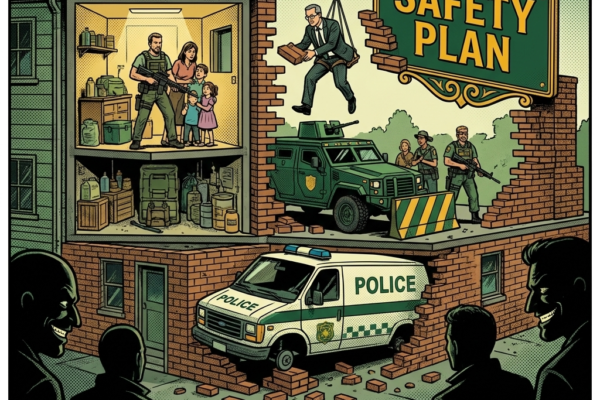
Our country faces an undeniable violent crime crisis at present. Law-abiding citizens, ranging from urban homeowners to vulnerable rural farming communities, live under the constant threat of home invasions, armed robberies and farm attacks. At the same time, the state’s capability to protect its citizens has deteriorated significantly. SAPS is chronically under-resourced, under-staffed and overburdened. Under these conditions, a legally owned firearm is frequently the last line of defence between an innocent family and a violent criminal syndicate. In contrast, over three billion rand is spent on VIP protection services for 160 government officials, it makes it hard to believe that it is these elitists that have a say over the safety and security of ordinary citizens, when they themselves live under heavily armed security on a daily basis.
The governments proposal to remove self-defence as lawful motivation for firearm ownership, while failing to control the rampant influx of illegal firearms flowing through criminal networks and corrupt state stockpiles, is an extraordinary overreach. This far-reaching proposal fundamentally implicates several core constitutional protections, including:
- – The Right to Life, the absolute foundation of all constitutional rights.
- – Freedom and Security of the Person, the right to be free from all forms of violence from either public or private sources.
- – Human Dignity, the inherent value of an individual to protect their physical integrity.
- – Meaningful Public Participation, the right of citizens to be genuinely heard and informed before laws are enacted.
If the government truly believes that disarming vulnerable citizens will make South Africa a safer place, it should have no reservation about laying its evidence bare. If there is definitive, uncorrupted research proving that removing legal firearms reduces the capabilities of violent criminals, let the public see it.
However, if the government refuses to disclose its research, or if the PAIA applications reveal that the FCAB is built on outdated data, flawed methodologies or purely ideological assumptions, then the public has been fundamentally misled. Public confidence in the legislative framework depends entirely on the state’s willingness to show its work. The public cannot meaningfully participate in a legislative commentary process if the state hides the very foundation of the proposed law.
THE MISSION OF CIVIL SOCIETY SOUTH AFRICA
The launch of the Transparency Project for CSSA, marks a significant evolution in our ongoing fight. Our mission is simple and unwavering: we represent the citizens who pay taxes, obey laws, and deserve a government that protects rather than endangers them. The Transparency Project directly advances this mission by shifting the battlefield from reactive to proactive, evidence-based litigation and public education.
The demand by CSSA for the full disclosure of the state’s legislative records, ultimately levels the playing field. For too long, civil society organisations and citizens’ rights groups have been forced to argue against government policies defensively, fighting vague assertions and state-sponsored rhetoric. Once the complete factual record, or lack thereof, is made public, the terms of the debate change completely.
If the state fails to produce credible evidence, CSSA will possess the necessary ammunition to mount definitive legal challenges against the FCAB, exposing it as irrational, arbitrary and unconstitutional in our courts.
Furthermore, this project strengthens CSSA’s role as a unifying shield for all citizens. This is about accountable government. Regardless of where someone stands on firearm ownership, every South African should expect legislation to be built on credible evidence rather than assumption or ideology.
The framing of this Project around the universal values of transparency, constitutional rights and administrative justice, puts CSSA in the forefront of a cause that protects every single South African, regardless of whether they chose to own a firearm or not. It positions the organisation as a premier watchdog against state overreach, ensuring that any future attempt by the government to erode citizen rights will be met with an immediate, structured demand for transparency.
THE PROMISE OF THE PROJECT
The journey towards full legislative accountability is long, and the state may try to delay, obscure or resist these PAIA applications. However, CSSA is fully prepared for a sustained engagement. We are committed to keeping the public informed at every single turn. As each PAIA application progresses, and as responses are received from the Presidency, SAPS, the department responsible for SEIAS and the Civilian Secretariat, we will publish the updates and make the primary documents available for public analysis.
The ultimate objective of the Transparency Project is to democratise information. We want to take the data out of locked ministerial cabinets and place it directly into the hands of the people. South Africans have lived through too much history of state secrecy to allow their safety to be legislated away in the dark.
The state has made its proposal; now, it must defend it with facts. CSSA will continue to demand the truth, protect the vulnerable and ensure that the voices and rights of law-abiding citizens are never sacrificed on the altar of political ideology.
Stay Informed
Campaign updates, legislation alerts, and advocacy news. No spam.