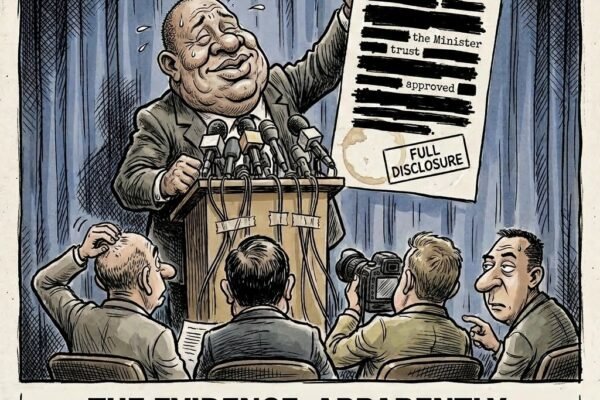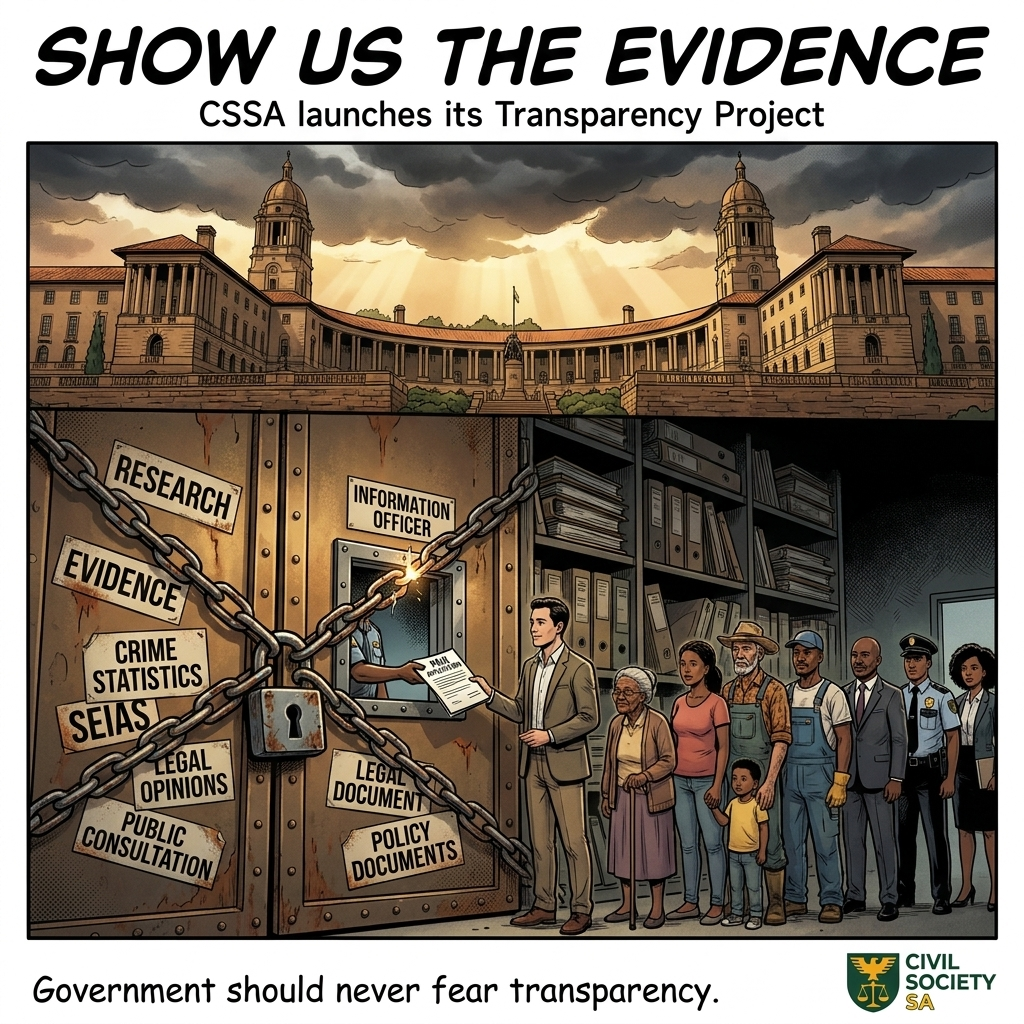
Civil Society South Africa (CSSA) has officially launched its Transparency Project, a new initiative aimed at ensuring that major public policy decisions affecting constitutional rights are supported by evidence, transparency and accountability.
As its first initiative, the project involves four comprehensive applications in terms of the Promotion of Access to Information Act (PAIA), directed at the key government departments involved in developing the Draft Firearms Control Amendment Bill.
The first application has already been submitted to the Civilian Secretariat for Police Service, with the remaining applications being submitted to the South African Police Service, The Presidency and the department responsible for the Socio-Economic Impact Assessment System (SEIAS). Collectively, the applications seek access to the complete documentary record underpinning the proposed amendments, including policy documents, research, crime statistics, impact assessments, constitutional and legal opinions, consultation records, correspondence, internal memoranda, meeting minutes and every other record relied upon during the development of the proposed legislation.
“The Transparency Project is built on a simple principle: government should be able to show the evidence behind the laws it proposes,” says Reece Clark, National Spokesperson for Civil Society South Africa.
“The Draft Firearms Control Amendment Bill seeks to remove self-defence as a valid reason for firearm ownership. That makes it all the more important that the public can see the evidence, research and policy considerations that informed such a far-reaching proposal.”
The PAIA applications request records relating to every stage of the Bill’s development, from its earliest policy discussions and legislative planning through to drafting, legal review, socio-economic impact assessments, consultation processes, implementation planning and supporting statistical evidence. They also seek disclosure of official correspondence, internal emails, presentations, electronic records and version histories where these formed part of the legislative process.
The application further notes that the proposed legislation has implications for several constitutional rights, including the rights to life, dignity, freedom and security of the person, access to information and meaningful public participation.
Clark says the initiative extends beyond the firearm debate itself.
“This is about accountable government. Regardless of where someone stands on firearm ownership, every South African should expect legislation to be built on credible evidence rather than assumption or ideology. Public confidence in the legislative process depends on government being willing to show its work.”
CSSA says the Transparency Project is intended to ensure that future public debate on the proposed legislation is informed by the complete factual record rather than political assertions.
“If government believes the proposed amendments will make South Africans safer, it should be willing to demonstrate why,” Clark concludes. “Our objective is simple. We want the evidence that informed the Draft Firearms Control Amendment Bill to be placed before the public so that South Africans can judge it for themselves.”
The organisation says it will publish updates as each of the remaining PAIA applications is submitted and will make the responses received available as part of its ongoing Transparency Project.
Soundbite: https://civilsocietysouthafrica.co.za/wp-content/uploads/2026/07/CSSA-launches-Transparency-Project-to-uncover-evidence-behind-proposed-firearm-law.mp3
Stay Informed
Campaign updates, legislation alerts, and advocacy news. No spam.