Violent crime in South Africa is by no means a new topic, and the latest CS Global Partners’ Global Safety Index does not paint a good picture with regards to the safety in our country. According to their Safety Index South Africa was ranked as one of the most dangerous countries in the world, being placed 129th out of the 166 ranked countries with a score of 44.7 out of 100. The score out of 100 is determined by the analysis of data on safety, political stability and the rule of law, which is taken from the Global Peace Index and the World Bank’s Worldwide Governance indicators. At the time the Index was published South Africa found itself ranking below Kyrgyzstan (121st), Isreal (114th) and Zambia (82nd).
Personal Safety has long been at the centre of public debate; however, this has intensified in recent years with the introduction of the Firearms Control Amendment Bill (“FCAB”), specifically the proposed amendments to Section 13 and 14 of the Firearms Control Act of 2000, which proposes to remove self-defence as a valid reason to own a firearm.
In order to answer the question “is self-defence a necessity in modern day South Africa?” one needs to looks at the legislative legal changes in comparison to the latest crime statistics published by the South African Police Service (“SAPS”).
- The current legislation and what the proposed amendments would mean
Two of the most important sections for ordinary citizens in the current Firearms Control Act (“FCA”) is Section 13 and Section 14. These sections are important categories under which citizens may legally possess firearms.
Section 13 is the section which allows citizens to obtain a licence to possess a firearm specifically for self-defence purposes. These licences are granted after a strict process is followed, this process includes competency certification, background checks, and storage requirements being met. Section 14 allows the possession of restricted firearms for self-defence, the conditions for these firearms are tighter and more stringent.
The proposed amendments contained in the FCAB seeks to repeal both sections, by removing “self-defence”, this essentially means that a firearm owned for self-defence or personal protection would no longer be a legally valid reason for obtaining a licence. In practice, the outcome would mean that citizens will be able to only own and licence firearms for purposes such as hunting, sport shooting or professional use. Essentially these firearms owned and licenced cannot be used for defending oneself or family against criminal threats.
During the public participation period the FCAB received over 118 000 public comments with the majority being in opposition to the removal of self-defence provisions. The results of the public participation period give a good insight into how the public feels about the sanctity of self-defence in our country.
- What the latest crime statistics show in South Africa
The extremely high levels of violent crime that is being experienced in South Africa has been confirmed by the third quarter 2025/26 crime statistics released by SAPS. These statistics are for the period between 1 October and 31 December 2025, a period of three months.
In this period the following statistics were recorded:
- – 6 351 murders;
- – 7 858 attempted murders;
- – 11 430 rapes registered;
- – 14 547 sexual offences recorded;
- – 50 253 assaults with intent to cause grievous bodily harm cases were opened.
The above figures show the stark realities that citizens of South Africa face on a daily basis, with the most worrying being that on average 71 murders and 127 reported rapes occur on a daily basis.
If one looks at the Victims of Crime Release 2024/2025 from the Governance, Public Safety and Justice Survey (GPSJS), the survey showed that 53.8% of households indicated that weapons were used during assault incidences, a gun being used 18.4% of the time and a knife being used 31.5% of the time. The survey further showed that 57.8% of households indicated that weapons were used during incidence of home robberies, a gun being used 71.1% of the time and a knife being used 30.3% of the time.
Although the statistics do show a marginal decrease in violent crimes, these figures are unacceptably high. The fact that more than 6 000 murders have been recorded in a single quarter, is unequivocally an indication that the issues within public safety institutions do not stem from the hands of legally owned firearms and citizens defending themselves and families against violent crime.
- Illegal firearms v legal gun ownership
A large proportion of illegally obtained firearms originate from theft, smuggling or corruption within law enforcement supply chains. The scandal involving Colonel Prinsloo is a perfect example of how illegal firearms can be obtained by criminals. This scandal involved over 2 000 firearms, which were meant to be destroyed, being sold to gang leaders and those firearms being used for violent crimes.
The criminals making use of these illegal firearms to commit violent crimes, do not go through the same stringent and strict legislative requirements that a citizen is required to, they are often ruthless and not held accountable. They abide by their own rules with no regards to the laws of our Country.
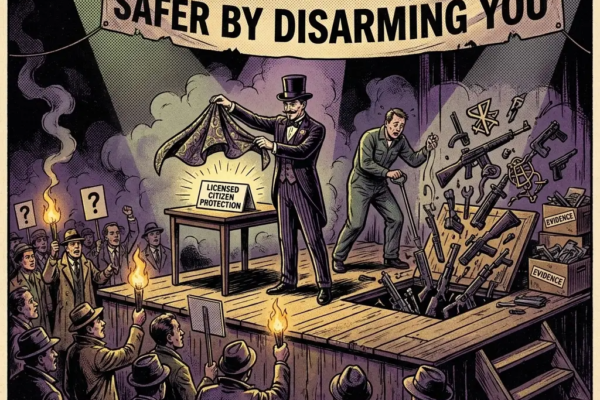
Civil Society South Africa’s position is clear and firm on this matter. Disarming citizens and limiting their right to self-defence is not a crime prevention strategy, it is instead a strategy that will leave citizens vulnerable and without the legal rights to protect themselves and families. Violent crime in our country does not stem from the hands of legal firearm owners, violent crime is the result of systemic failure within public safety institutions.
The idea that by reducing the number of legally owned firearms in our country will result in less illegal firearms being obtained by criminals, is simply short sighted and quite frankly ridiculous. Criminals will merely expand their networks and find other ways of obtaining illegal firearms to further their motives, whilst citizens will be left vulnerable and at the peril of criminals without recourse to exercise their constitutional rights, shifting the balance of power in favour of criminals.
- Police response v personal protection
The reality citizens face in our country is the varying police response times. Response times vary depending on location, resources and the nature of the emergency. Rural areas experience particularly long response times, whilst the response times in dense urban areas are impacted by stretched policing resources and high call volumes. In many cases citizens are fortunate if the police show up to begin with.
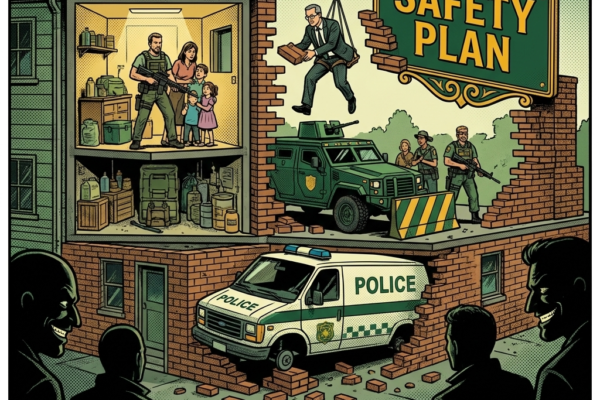
The difference between survival and tragedy for citizens confronted by violent crime comes down to seconds. Citizens in these situations are the first and only line of defence to protect themselves and families. In most cases, the police often arrive after violent crimes have been committed. This places the right to self-defence in the forefront of the realities faced.
The Section 13 and Section 14 amendments in the FCAB will ultimately deny citizens the right to defend themselves in situations where seconds matter and leave them vulnerable to armed criminals. Instead of focusing on legal gun owners and disarming citizens, public safety institutions should be focusing more on illegal firearms, policing capacity and crime prevention. Ultimately, with the unreliability of police to respond timeously to active violent incidences, who do citizens have left to protect themselves against a lethal force that follows their own rules?
- Conclusion
The question “Is self-defence a necessity in modern day South Africa?” must be considered in light of our country’s high levels of violent crime and the realities faced by citizens on a daily basis. The proposed amendments to the FCA, which seeks to remove self-defence as a valid reason for firearm ownership, represents a major change that could significantly affect the ability of citizens to protect themselves.
The recent crime statistics show that violent crimes such as murder, rape and serious assault remain extremely high, despite marginal decreases. In reality the illegal firearms being used by criminals are obtained illegally through theft, smuggling or corruption and ultimately limiting citizens access to firearms will not reduce our violent crime crises, these criminals have extensive illicit networks to obtain illegal firearms, and the focus should be on disseminating these networks rather than targeting legal firearm owners.
In addition to the recent crime statistics, the unreliability of the police to response timeously to violent crime incidents results in many situations where citizens must rely on themselves to respond to immediate threats. For this reason, self-defence remains a vital and important right from many South Africans.
Civil Society South Africa’s answer to the question, is an unequivocal and absolute YES. Given the unacceptably high crime statistics and the fact that citizens are most often than not the first and only line of defence against violent and armed criminals, coupled with the unreliability of police to response timeously. Self-defence in modern day South Africa is an absolute necessity. The realities remain clear Legal Firearms Saves Lives.
Stay Informed
Campaign updates, legislation alerts, and advocacy news. No spam.