Civil Society South Africa (CSSA) has today published an open letter to the Acting Minister of Police, Parliament, the Civilian Secretariat for Police Service, and the Portfolio Committee on Police, calling for the withdrawal of provisions in the Firearm Control Amendment Bill that seek to remove self-defence as a lawful motivation for firearm ownership.
The organisation argues that government has failed to produce evidence that restricting lawful firearm ownership for self-defence will reduce violent crime, while South Africans continue to face some of the highest levels of violent crime and organised criminality in the world.
“If government wants to remove self-defence as a lawful motivation for firearm ownership, it must first answer a simple question: how will doing so make South Africans safer?” says Reece Clark, spokesperson for Civil Society South Africa. “That burden of proof rests squarely with government. To date, that evidence has not been provided.”
The open letter points to a number of concerns regarding South Africa’s ability to combat violent crime effectively. These include the country’s ranking among the world’s most criminalised nations, low detection and conviction rates for serious violent offences, the growth of organised criminal networks, and the thousands of state-owned firearms that have been lost or stolen from police custody.
According to parliamentary disclosures, approximately 3 400 SAPS firearms were lost or stolen between 2019 and 2024. Only 559 were recovered, leaving thousands of firearms unaccounted for.
The organisation argues that these realities point to a failure of enforcement rather than a problem with lawful firearm ownership.
“South Africa’s violent crime crisis is not being driven by licensed firearm owners,” Clark says. “It is being driven by violent criminals, organised criminal networks, illegal firearms, extortion syndicates, gang activity, corruption, and a criminal justice system that too often fails to identify, apprehend, prosecute, and convict offenders.”
CSSA further notes that the Institute for Security Studies has reported that SAPS’ murder detection rate stands at only 11%, highlighting the significant challenges facing law enforcement and the broader criminal justice system. The organisation argues that public policy should focus on addressing these failures rather than restricting the ability of law-abiding citizens to protect themselves.
“Citizens do not invest in private security, neighbourhood watches, community patrols, emergency response services and other safety measures because they reject the authority of the State,” Clark says. “They do so because they understand a reality that government itself cannot escape. No police service can guarantee that help will arrive before a violent attack unfolds.”
CSSA maintains that self-defence remains a practical and necessary consideration in a country where many citizens live with the daily threat of violent crime.
“The right to life and security is not theoretical,” Clark adds. “When a citizen is confronted by an armed attacker, a home invasion, a farm attack, or a violent robbery, they cannot rely on assistance that has not yet arrived. Before government removes one of the few practical means available to citizens to protect themselves, it must demonstrate that doing so will improve public safety.”
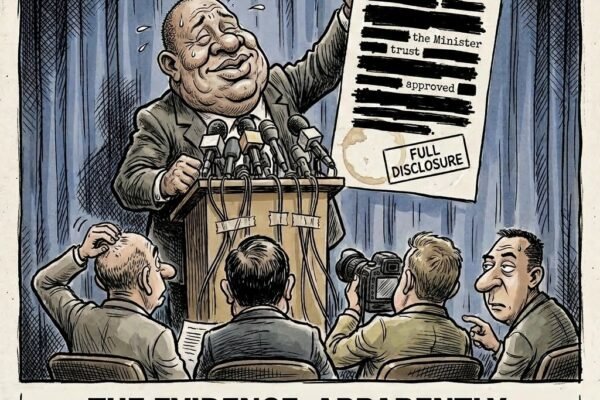
In its open letter, CSSA calls for the immediate withdrawal of the provisions removing self-defence as a lawful motivation for firearm ownership. The organisation also calls on government to publish all supporting studies, impact assessments, constitutional analyses, and evidence relied upon in formulating the proposal.
“South Africans deserve transparent, evidence-based policymaking,” Clark concludes. “Government should be focusing its efforts on the criminals who threaten society, not on the law-abiding citizens who comply with the law.”
The full open letter is attached.
Stay Informed
Campaign updates, legislation alerts, and advocacy news. No spam.