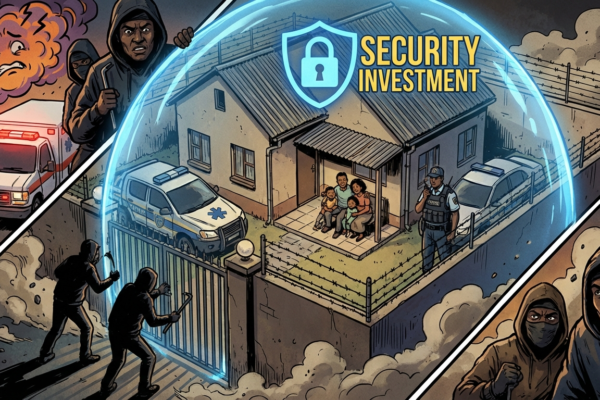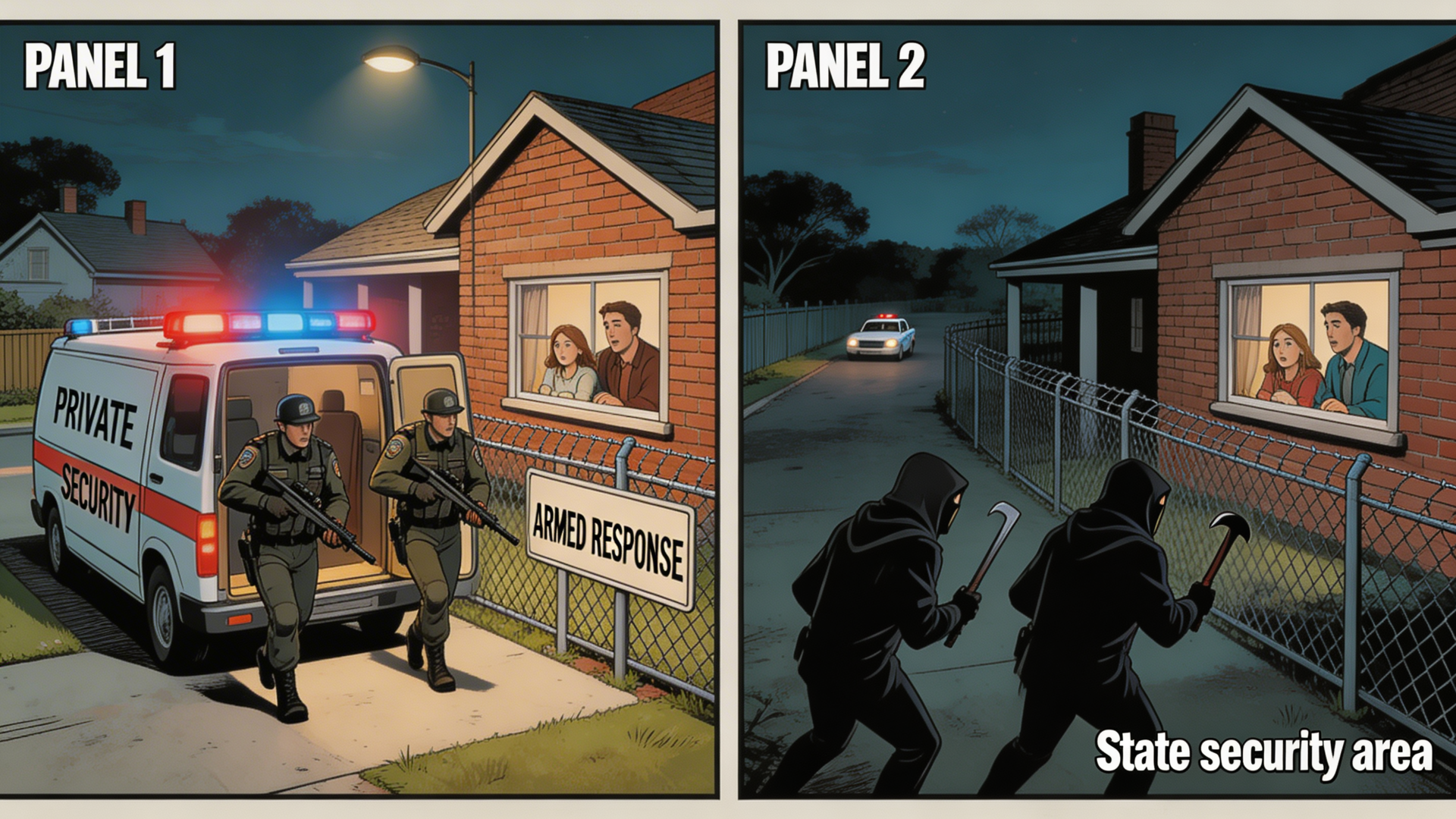
In many South African communities, the first emergency response does not come from the state.
It comes from private security.
This reality is not ideological. It is operational.
The reality on the ground
Across cities, small towns, industrial areas, and rural communities, private security companies respond daily to:
- Armed robberies
- Home invasions
- Violent assaults
- Alarm activations
- Medical and emergency incidents
In many cases, private response arrives within minutes. By contrast, official police response times often extend far beyond what violent crime allows.
How this shift occurred
Private security did not replace policing. It filled a gap created by capacity constraints, response delays, and increasing crime.
As communities faced growing risk, they sought immediate, practical protection. Armed response units, patrol services, access control, and monitoring systems emerged not as luxuries, but as necessities.
Today, private security is embedded in everyday safety for millions of South Africans.
The policy disconnect
Despite this reality, policy discussions frequently treat private security as optional or secondary. Proposed regulations risk weakening the very response capabilities that communities depend on during emergencies.
This creates a dangerous contradiction: relying on private security in practice while undermining it in policy.
What happens when response capability is weakened
When response capacity is reduced, communities do not become safer. They become slower to respond, easier to target, and more exposed during critical moments.
Violent crime unfolds in minutes, not hours. Policies that ignore this reality do not create neutrality. They create vulnerability.
A sector under pressure
Private security operates within legal frameworks and oversight structures. It employs hundreds of thousands of South Africans and provides stability where state capacity is limited.
Weakening this sector without providing a viable alternative does not strengthen public safety. It removes an essential layer of protection.
Public safety policy must be grounded in operational reality, not abstraction.
Stay Informed
Campaign updates, legislation alerts, and advocacy news. No spam.