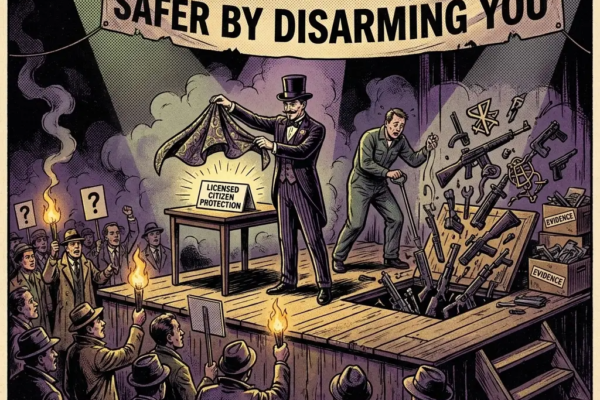
In South Africa’s firearm debate, one phrase is used constantly but rarely defined with any precision: law-abiding firearm owner.
It is a term frequently invoked in policy discussions, media commentary, and public debate. Yet when new laws are proposed, the legal meaning of that phrase often disappears. This lack of clarity matters, because firearm policy that ignores the distinction between compliance and criminality risks undermining both safety and trust in the law.
What the law requires of legal firearm owners
Legal firearm ownership in South Africa is already one of the most tightly regulated civilian activities in the country.
Before a firearm is issued, an applicant must submit to a rigorous process that includes:
- Criminal background checks
- Competency certification
- Detailed motivation demonstrating lawful purpose
- Secure storage compliance
- Extended waiting periods that frequently stretch into years
A law-abiding firearm owner is not defined by possession alone. They are defined by compliance with a demanding legal framework and ongoing state oversight.
Compliance does not end with approval
Licensing approval is not the end of regulation. Firearm owners remain subject to continuous legal obligations, including:
- Licence renewals
- Storage inspections
- Transport restrictions
- Strict limits on lawful use under criminal law
Any breach of these requirements carries severe criminal penalties. Compliance is therefore not symbolic. It is enforced, monitored, and consequential.
Criminals are not part of this system
Those who commit violent crimes using firearms do not participate in this licensing framework. They do not apply, wait, renew, or comply.
This creates a central policy challenge. When legislation increases restrictions on legal ownership without addressing illegal access and criminal networks, the burden falls entirely on those already following the law.
The risk of policy blindness
When lawmakers speak about reducing firearm availability without distinguishing between legal and illegal possession, they collapse two fundamentally different categories into one.
This has real consequences for response capability, rural safety, and lawful self-defence. A system that treats compliance as a liability discourages cooperation and weakens public trust in legal institutions.
Why precision in law matters
Laws work best when they target behaviour that causes harm. When legal compliance becomes the focus of restriction, while criminal behaviour remains largely unaffected, public safety is not improved.
Clear definitions are not technicalities. They are the foundation of effective lawmaking.
Civil Society South Africa believes that firearm policy must be grounded in legal reality, precision, and accountability if it is to serve the public interest.
Stay Informed
Campaign updates, legislation alerts, and advocacy news. No spam.