As an organisation advocating for firearm rights and lawful firearm owners across South Africa, we are often asked a fundamental question: How does a government propose legislation so entirely divorced from the harsh realities on our streets?
When the Department of Police published the Draft Firearms Control Amendment Bill (“FCAB”), it sparked justified outrage. The FCAB seeks to eliminate self-defence as a valid reason for firearm ownership, it seeks to drastically reduce licence validity periods, and severely restrict hunters, sport shooters, and the private security sector.
To understand how such an ideological, flawed draft reached the public, one must look behind the administrative curtain at a bureaucratic entity few citizens have ever heard of: the Socio-Economic Impact Assessment System (“SEIAS”).
WHO IS THE SEIAS?
The SEIAS is an administrative unit and regulatory framework operating under the custodianship of the Department of Planning, Monitoring and Evaluation (“DPME”) and the Presidency. Introduced by Cabinet in February 2015 to replace the older, less rigorous Regulatory Impact Assessment (“RIA”) framework, SEIAS was designed as a critical gatekeeper for executive decision-making.
In Theory, before any government department can introduce new legislation, policy, or amendments to Parliament, it must subject its proposals to the SEIAS process. The system was intended to put an end to “policy by decree” and combat the government’s long-standing habit of passing laws that look good on paper but collapse under the weight of financial, practical and social implementation.
WHAT DOES SEIAS DO?
The objective of SEIAS is to force departments to analyse policy options through evidence-based, objective methodology. When functioning properly, SEIAS is supposed to rigorously analyse the core problem by requiring officials to properly define the socio-economic issue they are trying to solve. It is also designed to conduct a comprehensive cost-benefit analysis that maps out who benefits and who pays, explicitly calculating the economic, legal, and operating costs imposed on both the state and private citizens.
Furthermore, the framework must evaluate alternatives to test whether less restrictive or less costly policy options could achieve the same public safety goals without over-regulating compliant citizens. Finally, SEIAS is mandated to manage risks and implementation by assessing the actual operational capacity of state institutions to enforce any proposed law. This process operates in two distinct phases, starting with an initial Impact Assessment to guide early drafting and culminating in a Final Impact Assessment submitted alongside the final Bill to Cabinet. Without a signed-off SEIAS certificate, a Bill theoretically cannot proceed.
WHY SEIAS IS VITAL TO THE FCAB
For South Africa’s legal firearm owners, hunting associations, sport shooting bodies, and private security operators, SEIAS is not mere administrative red tape. It represents a vital safeguard rooted in both evidence and constitutional rights. When applied to the FCAB, a rigorous SEIAS assessment becomes essential for several critical reasons.
South Africa faces elevated rates of violent crime, including murder, high-jacking, and home invasions. Stripping law-abiding citizens of their legal right to own a firearm for self-defence directly impacts their constitutional right to life and physical integrity, making it imperative for SEIAS to evaluate whether disarming responsible citizens while violent crime rises is an objective or rational approach.
At the same time, the firearm ecosystem serves as a vital economic engine, driving billions of Rands into the South African economy through wildlife conservation, eco-tourism, local and international hunting, sport shooting competitions, manufacturing, and retail. The private security industry, which employs hundreds of thousands of South Africans, also relies heavily on clear and workable firearm regulations. A comprehensive SEIAS report is obligated to quantify the job losses, revenue declines, and broad economic damage such restrictions would inflict.
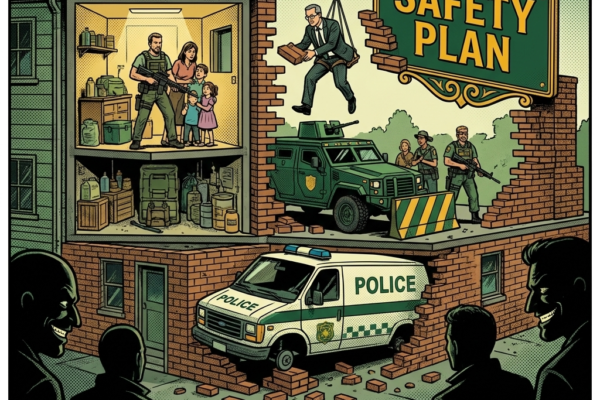
This analysis must also account for state capacity. The South African Police Service and the Central Firearms Registry have struggled for years with administrative backlogs, missing dockets, corruptions, and systemic inefficiency. A mandatory responsibility for SEIAS is determining whether the state possesses the capacity to enforce new regulations, because pushing further administrative burdens onto a failing register defies all operational logic.
WHY SEIAS HAS FAILED AND THEIR WEAKNESSES IN MODERN SOUTH AFRICA
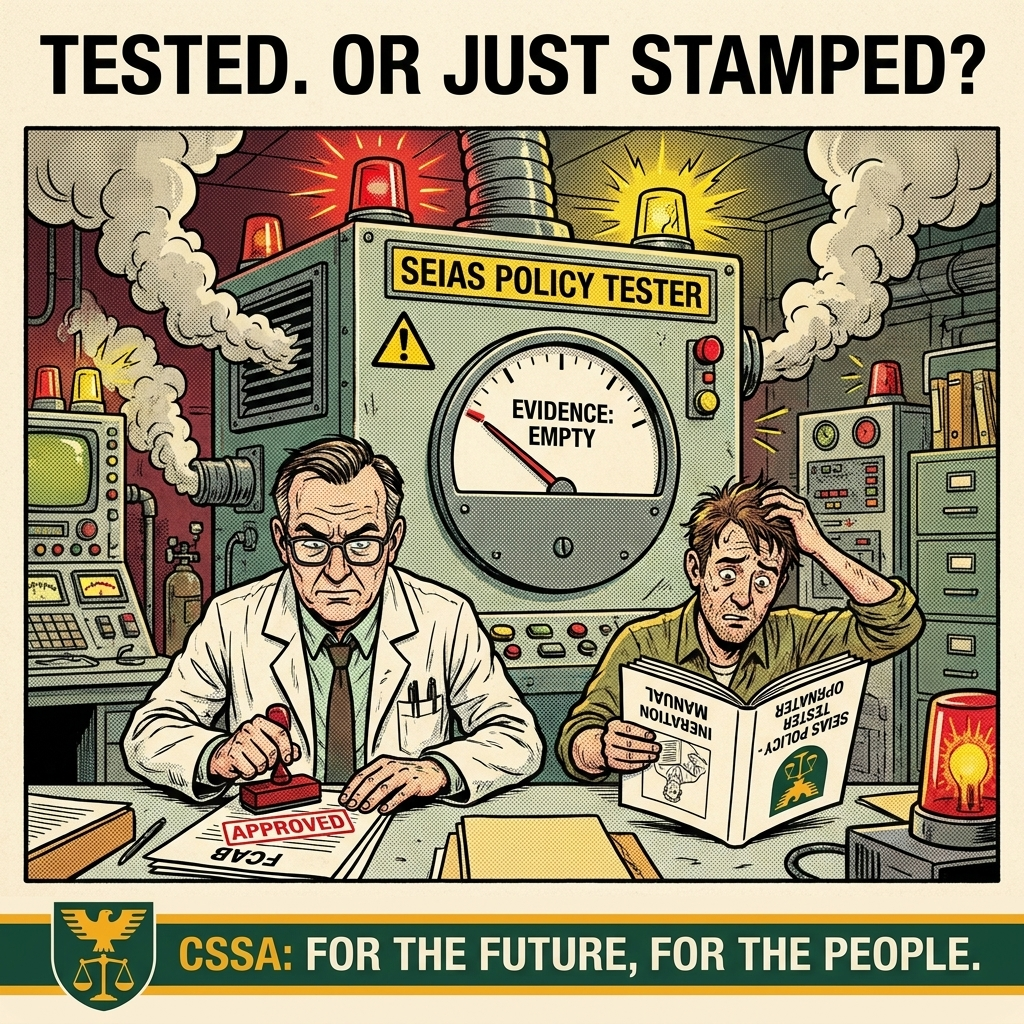
Despite its noble mandate, SEIAS has consistently failed the South African public. In the context of the FCAB, the system’s execution demonstrates how an objective assessment mechanism can quickly degrade into a rubber-stamping exercise for political agenda.
The initial impact assessment for the FCAB relied heavily on dubious logic and ideological driven data. It conflated legal, licenced firearms with the proliferation of illegal weapons used by syndicates and violent criminals. By blaming legal firearm owners for society’s violence, SEIAS failed its most basic duty to accurately identify the root cause of the problem.
Equally concerning is how the assessment completely overlooked state failures, particularly the loss, theft, and corruption within state armouries. Parliamentary records and independent investigations show that thousands of police service weapons and state ammunition stockpiles have leaked directly into the hands of criminal gangs, yet SEIAS failed to hold the state accountable for its own inventory management, choosing instead to target compliant citizens.
Rather than conducting genuine analysis, SEIAS devolved into a box-checking exercise. In theory, the system must test whether alternative policy approaches were evaluated. Yet, when drafting the FCAB, options like fixing the Central Firearms Registry, enforcing stricter border controls, tackling police corruption, and deploying visible policing were largely brushed aside in favour of a total ban on self-defence firearms. SEIAS functioned not as a filter for bad law, but as a formal exercise to validate decisions that has already been made politically. It poses the question: how much pull does anti-gun groups actually have within the political sphere of our country?
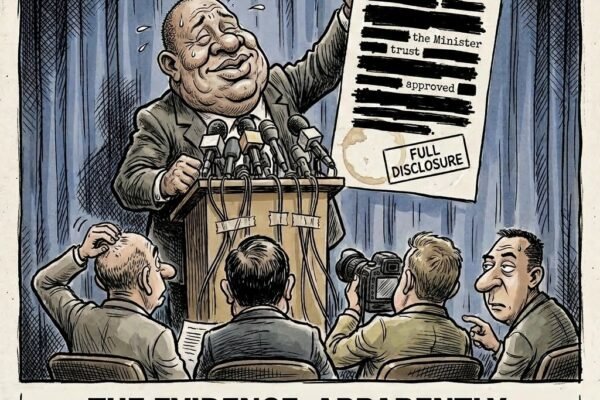
This breakdown is compounded by a profound lack of transparency and public accountability. Civil Society SA and other firearm rights bodies have had to rely on Promotion of Access to Information Act applications to force government bodies to release complete SEIAS records and internal review documentations. If SEIAS were working as intended, its research, cost-benefit models, and expert reviews would be open to public scrutiny from day one.
CONCLUSION
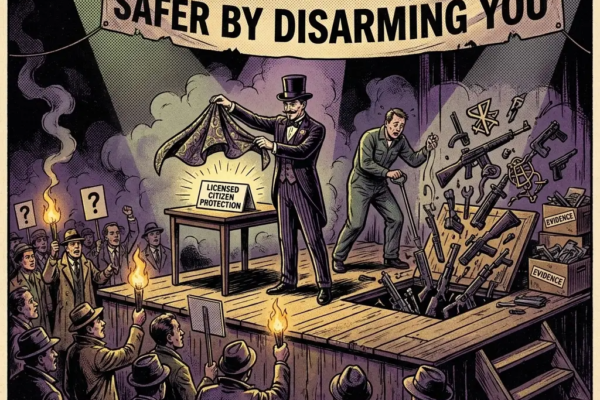
The SEIAS was created to ensure that South African laws are grounded in evidence, reality, and economic sense. When it comes to the FCAB, SEIAS has fallen short of those goals. Disarming responsible, vetted, and law-abiding citizens does not make a country safer, as it merely creates soft targets for armed criminals who ignore the law entirely, and are allowed to act with impunity with no concern for being brought to justice. It is time for the government and the Presidency to restore integrity to the SEIAS process by demanding policy build on facts, hard data, and constitutional respect rather than administrative box-checking that leaves innocent South Africans defenceless.
Stay Informed
Campaign updates, legislation alerts, and advocacy news. No spam.