It is not a fallacy that our country is wrestling with some of the highest violent crime rates in the world, personal safety in our country is not an abstract political discussion, it is an hourly calculation of survival. Every day, millions of South Africans navigate a landscape marked by home invasions, high-jackings, armed robberies, violent assaults, and murders. In response to this harsh reality, and informal yet vital multi-tiered defence structure has naturally evolved to protect families, businesses, and communities.
This structure relies on three distinct lines of defence, beginning with individual citizens taking primary responsibility for their own immediate safety through lawful firearm ownership. Supporting this individual effort are citizen funded private security service providers that fill the massive vacuum left by public law enforcement. Finally, the structure relies on the South African Police Service (“SAPS”), the statutory law enforcement body constitutionally tasked with maintaining public order and safety.
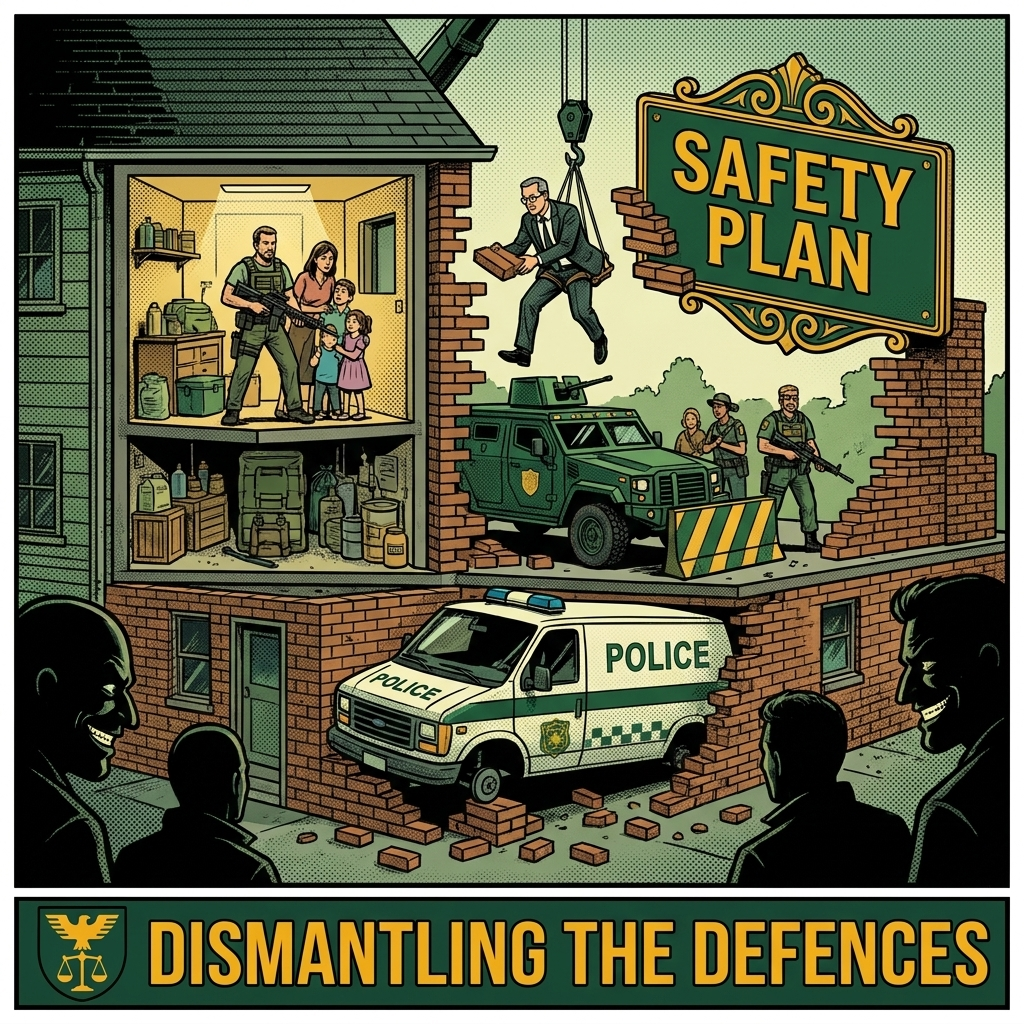
When working together, these tiers offer law-abiding citizens a fighting chance against rampant criminality. However, legislative proposals such as the Firearms Control Amendment Bill (“FCAB”) and overbearing Private Security Industry Regulatory Authority (“PSIRA”) restrictions threaten to dismantle the first two lines of defence. This push forces citizens to rely entirely on a third line of defence that has proven systematically incapable of protecting citizens.
THE FIRST LINE: SELF-DEFENCE
The first line of defence is, and always will be, the individual. When a violent intruder breaks down a door in the middle of the night, there is no time to convene a committee, draft a report, or wait thirty to sixty minutes for a police van to arrive. The average violent attack lasts mere seconds or minutes, making the victim the only person present at that crucial juncture who can stop an act of violence.
Section 11 of the constitution guarantees that everyone has the right to life. Yet a right to life is purely theoretical if individuals are deprived of the practical means to defend that life when it comes under imminent threat. In a country where criminal syndicates and home invaders operate with high-caliber firearms and overwhelming force, a civilian armed with only good intentions or a panic button is stripped of their primary means to act with equal force. A firearm acts as the ultimate equaliser, enabling a vulnerable individual, regardless of physical strength, age, or gender, to stop a lethal threat effectively.
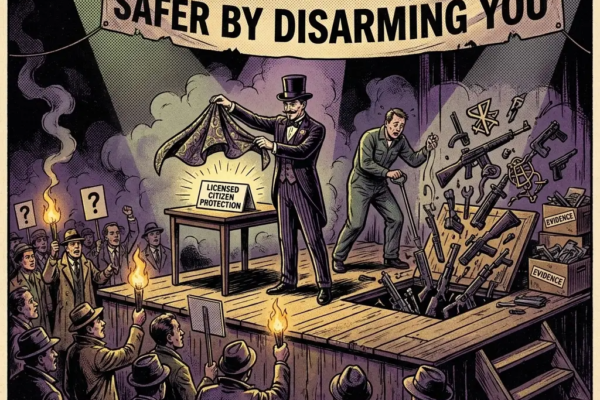
The FCAB represents a direct, catastrophic threat to this primary line of defence. Most notably, the proposed amendments seek to remove Section 13 of the Firearms Control Act (“FCA”), which allows citizens to licence firearms for self-defence purposes. If enacted, the FCAB would effectively disarm law-abiding citizens, making it illegal to purchase or possess a firearm to protect oneself and one’s family.
The ideological premise behind the FCAB is that reducing the number of legal firearms reduces overall violent crime, but this argument fundamentally confuses cause and effect. Law-abiding, vetted firearm owners who undergo rigorous background checks, competency training, and safe storage inspections are not the drivers of violent crime.
Furthermore, disarming law-abiding citizens creates a target-rich environment for criminals who ignore firearm laws and acquire their weapons through black market channels and state loss. By disarming the victim while violent criminals remain heavily armed, the FCAB effectively neutralises the first line of defence, rendering citizens defenceless in their own homes.
It becomes clear, the government and anti-gun groups would rather make South Africans the victims of violent crime through the draconian FCAB and political agendas, then actually give South Africans the proper tools to defend their right to life and not become a victim in the first place.
THE SECOND LINE: PRIVATE SECURITY
As a result of public policing being severely stretched and ultimately ineffective in our country, South Africans have built one of the largest private security sectors in the world. Armed response companies, neighbourhood patrol units, estate security guards, and close-protection officers constitute the second line of defence. These private security companies act as a critical force multiplier by responding to alarms, conducting visible patrols in residential areas, tracking hi-jacked vehicles, and providing swift backup during active home invasions. For millions of households, private security is the fast, reliable shield that stands between them and violent crime.
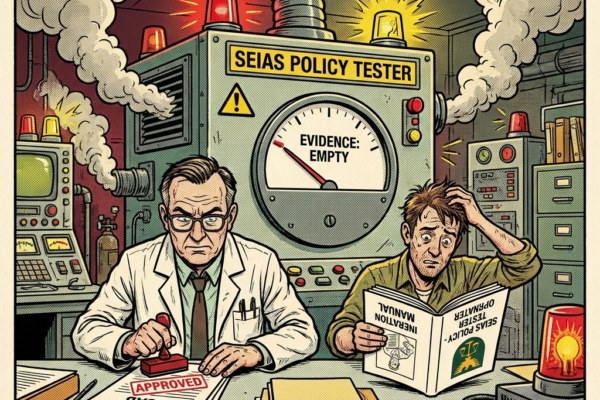
Despite the private security sector’s pivotal role in preserving public safety, sever regulatory burdens and restrictive frameworks from the PSIRA threaten to cripple its operational capabilities. The proposed PSIRA amendments will result in private security companies facing extensive administrative hurdles regarding the licencing, issuing, and storage of corporate firearms. Security officers will be subjected to strict restrictions on the types of firearms they can carry and the conditions under which those weapons may be issued.
Furthermore, operational bottlenecks will prevent response units from deploying appropriate semi-automatic firearms, leaving security personnel severely outgunned when confronting heavily armed cash-in-transit syndicates or violent gang networks. Various regulatory proposals have also repeatedly sought to restrict foreign ownership of security companies or curb the capacity of private companies to maintain armed rapid-response teams. If private security providers are weighed down by administrative red tape, disarmed, or limited to handguns against heavily armed criminal networks, the second line of defence collapses. Citizens who pay out of their own pocket for private protection to buy some sort of peace of mind, are left paying for security guards who lack the firepower or legal standing to protect them effectively.
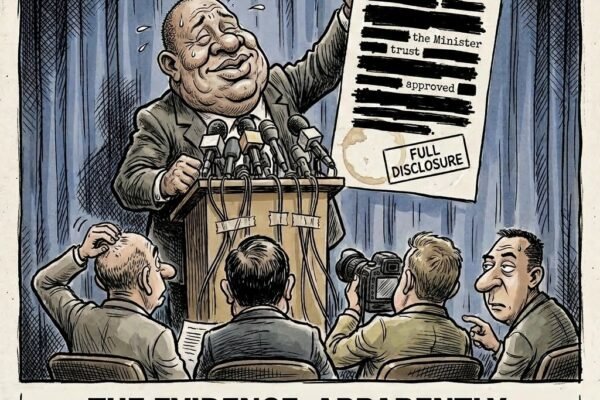
Recently, the Acting Minister of Police has indicated that the government will explore a relationship between the SAPS and the private security industry, to help and aid the police. Government has acknowledged that the SAPS has failed, and are failing, in their primary duty to protect South Africans and need the assistance of the private security industry. However, how can the government now call to explore this relationship, when the PSIRA amendments are still on the table. A clear line in the sand needs to be drawn, and that line needs to start at scrapping the PSIRA amendments in its entirety and nurture a strong relationship with the private security industry for the sake of South Africans and their safety.
THE THIRD LINE: THE SAPS
The third line of defence is the state through the SAPS. Under normal constitutional conditions, a state’s police force should serve as the primary guarantor of law and order. In our country, however, the SAPS has become a crumbling structure incapable of delivering basic protection to its citizens. Far from being a primary guard against violent crime, public law enforcement functions mainly as an after-the-fact reporting service where traumatised victims queue to receive a case number for insurance claims.
When violent crime is in progress, speed is everything, yet official data and parliamentary reports paint a damning picture of response capabilities. National emergency call centres suffer from severe understaffing, leading to hundreds of thousands of dropped or unanswered calls annually across major urban centres like Johannesburg, Cape Town, and Gqeberha. In many provinces, average response times to active violent crimes exceed thirty minutes, while in some rural areas and outlying districts, response times stretch beyond an hour. When intruders are inside a house, a thirty-minute police response time is functionally equivalent to no police response at all.
This slow response capability is compounded by the systemic operational deficits within the SAPS. Police stations regularly operate with a fraction of the required functional patrol vehicles, leaving officers stranded at police stations while emergency calls come in. At the same time, police-to-population ratios have steadily declined, leaving the remaining officers overworked, under-trained, and ill-equipped to combat organised criminal syndicates.
Perhaps the most ironic aspect of the government’s push to disarm law-abiding firearm owners is that the state itself is one of the primary sources of illegal firearms on our streets. Thousands of official police issued firearms and ammunition have been reported lost or stolen from state armouries and evidence rooms over the past decade. High-profile cases, such as corrupt officials selling confiscated firearms directly to gang leaders on the Cape Flats, demonstrate that state armouries have repeatedly fuelled the very violent crime public policing is supposed to supress.
Expecting citizens to surrender their self-defence firearms to rely solely on the SAPS is asking citizens to place their lives in the hands of an institution that cannot secure its own armouries, answer its emergency call lines, or arrive in time to stop a murder in progress.
A RECIPE FOR DISASTER
When analysed together, the dangerous synergy between the FCAB, private security regulatory overreach, and systemic policing failures becomes clear. The state is attempting a two-pronged attack by disarming the individual through legislative amendments while simultaneously restricting private security companies into operational impotence.
This policy leaves citizens entirely dependent on a state police service that is structurally broken. Removing the first two lines of defence while the third line is failing does not create a safer country, but rather creates a monopoly on force enjoyed only by violent criminals and state authorities. During the July 2021 unrest in KwaZulu-Natal and parts of Gauteng, this vulnerability was exposed to the country. As widespread looting, arson, and anarchy swept through communities, police forces were overwhelmed and largely absent. Neighbourhoods and shopping centres were saved from total destruction not by state intervention, but by armed citizens, community policing forums, and private security companies working side by side. Had citizens been disarmed prior to 2021, the loss of life and economic devastation would have been exponentially worse.
CONCLUSION
Firearm ownership in our country is not about aggressive vigilantism, but about the fundamental, non-negotiable right to protect human life, bodily integrity, and family when no one else is there to help. Law-abiding firearm owners are responsible citizens who undergo rigorous background checks, legal training, and ongoing competency evaluations. They are active participants in their own safety, contributing to safer communities and reducing the burden on an already overwhelmed state.
To protect South Africa’s security future, public policy must align with reality by permanently scrapping the FCAB in favour of regulations that streamline licencing for law-abiding citizens while clamping down on illegal firearm smuggling and corruption. Furthermore, security regulations must enable, rather than hamper, private security companies in carrying out their critical protection duties, and governments efforts must focus on fixing the severe structural, logistical, and ethical problems within the SAPS rather than shifting blame onto law-abiding firearm owners.
Until the government can guarantee the safety of every citizen in every home across the country, it has no legal, moral, or practical right to strip law-abiding citizens of their primary means of self-defence. Defending the right to own firearms for self-defence is, quite simply, defending the right to life itself.
Stay Informed
Campaign updates, legislation alerts, and advocacy news. No spam.