South Africa faces an undeniable, escalating crisis of violent crime. In a country where the state’s policing infrastructure is stretched to its absolute limits, citizens have long relied on a crucial frontline defence: the private security industry. Operating day and night, private security firms fill the vacuum left by an overburdened South African Police Service (“SAPS”).
However, a devastating new threat to our safety comes not from criminal syndicates, but from the Department of Police itself.
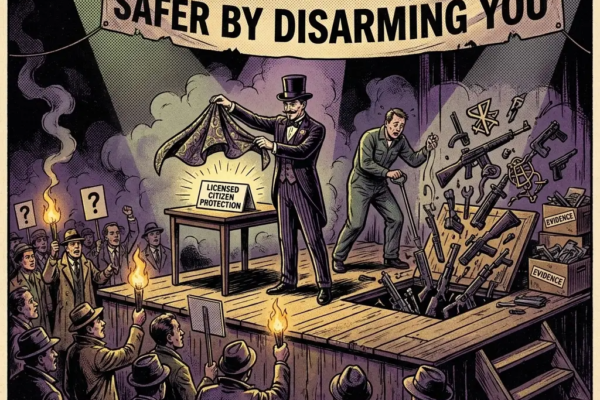
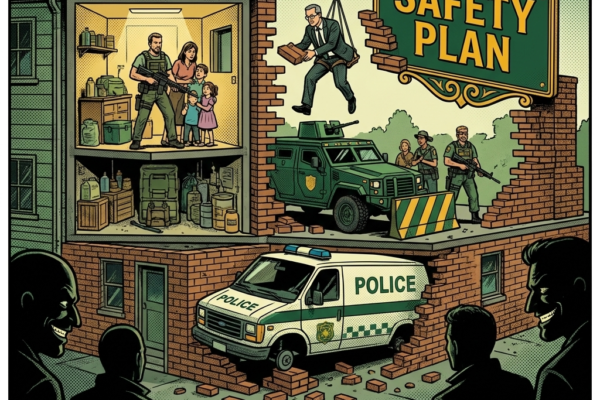
The draft amendment of the Private Security Industry Firearms Regulations, published by the Minister of Police under the Private Security Industry Regulation Act (Act 56 of 2001), introduces sever restrictions that threaten to cripple private security operations. If these amendments pass in their current form, they will effectively disarm our guards, blindside our tactical teams and leave ordinary South Africans entirely vulnerable to heavily armed criminal networks.
As a voice for an industry that protects millions of homes, schools and businesses, we must sound the alarm. These regulations do not make South Africa safer; they systematically dismantle a very important and functional shield citizens have left.
DISMANTLING THE SHIELD: THE CORE REGULATORY CHANGES
To understand why the industry is unified in its outrage, one must look at the specific, highly restrictive provisions detailed in the draft gazette. The regulatory changes focus heavily on disarming guards in everyday environments, restricting access to necessary equipment, and limiting ammunition under highly ambiguous language.
- THE DE FACTO BAN ON FIREARMS IN PUBLIC SPACES
The most alarming change is found under Sub-regulation 13(A)(1)(q), which explicitly prohibits private security officers from possessing firearms in public places unless they meet exhaustive, highly restrictive criteria. According to the draft, prohibited public spaces include: Shopping malls and retail complexes; Restaurants, parks and places of worship;
Taxi ranks and transit hubs; Hospitals, clinics and schools; and “Any other similar public establishments”.
To carry a weapon in these zones, a private security firm must apply for explicit permission from the Private Security Industry Regulatory Authority (“PSIRA”). This approval is connected to what legal experts highlight as vague, unspecific expectations that open the door to massive bureaucratic delays and administrative abuse.
- DISARMING HIGH-RISK TACTICAL TEAMS
Criminal syndicates in our country do not lack firepower. Cash-In-Transit (“CIT”) robbers, illegal mining syndicates and business robbery gangs frequently deploy military-grade automatic and semi-automatic assault rifles.
Yet, Sub-regulation 13A(12) and (13) seek to severely restrict the use of semi-automatic rifles by private security firms. Under the new rules, firearms exempt from a special exemption may only be issued for:
- High-value goods-in-transit (CIT);
- Critical infrastructure protection (national key points); and
- Anti-poaching operations.
Any tactical intervention team, anti-hijacking unit, or residential armed response group operating outside these narrow pillars will be legally barred from using semi-automatic rifles. To use them, companies must apply for a case-by-case exemption from PSIRA, which will only be granted if the regulator finds the grounds “sufficiently compelling”. In our view, the fact that police response times are unacceptably long and considering the systemic failure and corruption with the SAPS, their inability to police our country effectively and keep its citizens safe is more than “sufficiently compelling”.
- VAGUE LIMITS ON AMMUNITION
Under Sub-regulation 13(A)(1)(s), armed response officers may only be issued “a reasonable quantity of ammunition for the purposes of rendering the relevant security service.”
Astonishingly, the draft fails to define what constitutes a “reasonable” quantity. By failing to provide objective, standardised numbers, the state is introducing unwanted uncertainty into high-stakes operational environments, making compliance a moving target based entirely on the subjective interpretation of a government inspector.
- PROHIBITION OF “LOW-RISK” TACTICAL TOOLS
The amendments go a step further by seeking a total prohibition on the possession and deployment of alternative tactical gear, including rubber bullets, water cannons and tasers. The regulator’s logic is that these tools are strictly the domain of SAPS Public Order Police (“POP”). By stripping private security firms of these non-lethal intermediate options, guards are left with an impossible choice when facing crowd volatility or violent intruders. They must either put themselves in harms way by using standard physical force, or resort immediately to lethal ammunition.
A very hypocritical prohibition considering that SAPS are always the last to arrive when crimes are in progress. Not all situations require lethal force and non-lethal options are often the best way to ensure the safety of everyone involved, but it would appear that the state is willing to exclusively reserve these measures to the POP that cannot efficiently protect citizens, whilst not giving private security firms an option. It is clear, they must either put their body on the line against violent criminals and rowdy crowds or use lethal force. Two extremes when in fact a middle option is available.
WHY THESE CHANGES WILL CATASTROPHICALLY AFFECT SOUTH AFRICAN SECURITY
If these regulations are finalised, the consequences for the safety of ordinary South Africans will be immediate, far-reaching and potentially fatal.
The restrictions on carrying firearms in public spaces directly compromises neighbourhood safety. Armed response vehicles continuously patrol public suburban streets to keep visual presence high and respond to residential alarms. Because residential roads, greenbelts and community parks are legally defined as public spaces, an armed response officer patrolling your streets could be deemed acting unlawfully under these amendments.
If a company cannot navigate the PSIRA’s vague application process to secure a public-carry permit, your local security provider will be forced to respond to a home invasion entirely unarmed without the option of carrying and deploying non-lethal options. This will inevitably result in armed criminals acting with impunity because they will know there will be no force to stop them.
The restriction on semi-automatic rifles creates an absurd security blind spot that criminals will exploit instantly. As industry experts have pointed out, under these rules, a private security firm can legally protect high-value electronic goods or bullion with semi-automatic rifles while they are moving on a highway in a logistics truck. However, the moment these exact goods are unloaded into a stationary warehouse or distribution centre, the guards protecting the depot are legally stripped of their rifles and forced to defend the facility with basic handguns.
Similarly, tactical teams protecting large shopping malls or industrial parks will be entirely outgunned. Forcing an anti-hijacking unit or a retail tactical team to confront a syndicate armed with AK-47s, R1s and R4 rifles, whilst carrying nothing more than a standard pistol is a death sentence for the guards and a green light for violent criminals.
The preamble of the Private Security Industry Regulation Act itself recognises that the adequate protection of the fundamental rights to life and safety and security of the person is fundamental to the well-being of every South African. Private security fulfils this constitutional obligation where the state fails.
By disarming the private sector, the Ministry of Police is actively stripping citizens of their chosen means of self-defence. When a home invasion or a business robbery occurs, every second counts. Private security routinely arrives at crime scenes minutes before state resources can mobilise. Forcing these first responders to operate under a regulatory straightjacket directly infringes upon the public’s right to safety.
THE CORE CONTRADICTION: STATE FAILURE V PRIVATE RESTRICTION
The underlying premise of these amendments is that reducing firearms and firepower within the private security industry will somehow enhance national security. This logic is deeply flawed. The private security sector is already one of the most heavily regulated, audited and compliant environments in South Africa.
The bitter irony of the state’s approached has been pointed out continuously. We at Civil Society South Africa have highlighted on numerous occasions, that an unacceptably high volume of fully automatic and semi-automatic military and police issued rifles flow into the hands of criminal syndicates as a direct result of state negligence, losses from SAPS armouries and theft from the South African National Defence Force.
Rather than plugging the leaks in state armouries and disarming criminal syndicates, the Ministry of Police has chosen to penalise and disarm the law-abiding and strictly vetted businesses that citizens pay to protect them.
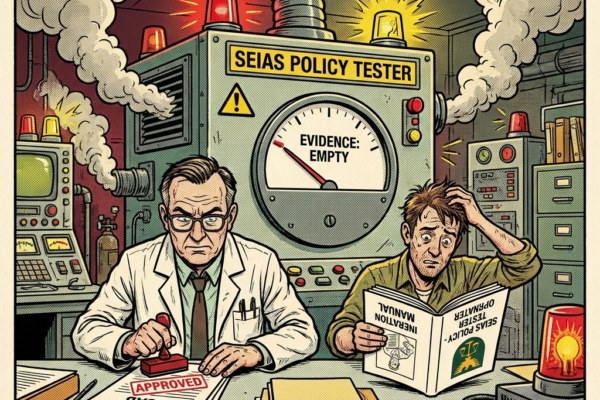
While PSIRA claims these amendments are designed to introduce “conditions under which specific calibres may be used” to enhance oversight, the reality is a framework written with a fundamental misunderstanding of the operational realities on the ground.
CONCLUSION
The private security industry does not oppose oversight, rigorous training or strict accountability, in fact these high standards are welcomed. However, an absolute line needs to be drawn in the sand at regulations that fundamentally compromise the physical safety of all security officers and, by extension, the lives of every ordinary South African. The catastrophic flaw of these amendments is that they view private security through a purely ideological lens, rather than a practical one. In the real world, restricting a legitimate security firm does not disarm a criminal syndicate; it simply creates a defenceless target. If these amendments pass into law, the vital buffer zone between violent crime and your family will completely vanish.
The direct consequence of this regulatory overreach will immediately ripple through evert facet of South African life. Local suburban armed response will be legally handcuffed, unable to petrol public roads with the tools required to intercept suspects before they cross over property lines. At the same time, shopping centres, schools and hospitals will be transformed into soft targets for heavily armed criminals who will operate with full impunity and confidence, knowing that the first-responding security guards have been systematically disarmed by their own government. Even the specialised tactical teams will be forced to confront military-grade weapons with standard-issue handguns, creating an operational imbalance so severe and deadly that it will inevitably trigger a retreat of private protection from high-risk zones entirely.
To strip tactical guards of their evenness of firepower against ruthless criminal syndicates, and to effectively ban armed response from the very public infrastructure they are paid to protect, is an irrational and dangerous mistake. South Africans are already paying a heavy price for the collapse of public law enforcement, spending their own hard-earned money just to buy a basic sense of safety in their own homes. We cannot allow reckless regulations to strip away the final line of defence keeping our families, businesses and our country alive. The Ministry of Police must abandon these destructive clauses before they sign away the safety of an entire nation.
Stay Informed
Campaign updates, legislation alerts, and advocacy news. No spam.