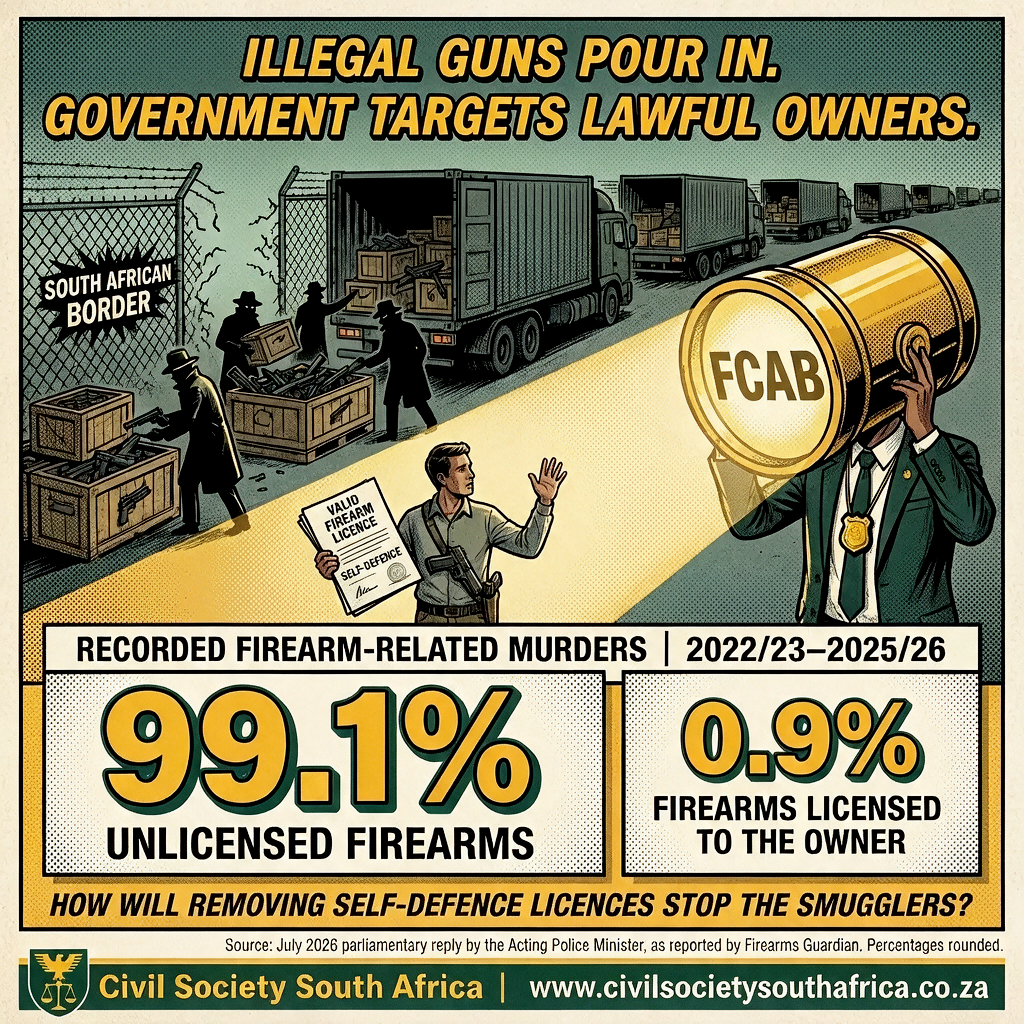
Civil Society South Africa (CSSA) challenges Acting Police Minister Firoz Cachalia to explain how removing self-defence as a valid reason for firearm licensing would dismantle the criminal syndicates bringing illegal firearms into South Africa.
Responding to Cachalia’s comments about cross-border firearm trafficking and the proposed Firearms Control Amendment Bill (FCAB), CSSA says government’s acknowledgement of this illegal supply demands concrete action against the networks responsible.
“How will refusing a self-defence licence to a law-abiding South African stop a trafficker bringing weapons across the border? These syndicates operate outside the licensing system. The minister must explain how the proposed restrictions would disrupt their business,” says Reece Clark, spokesperson for CSSA.
CSSA says cross-border trafficking requires intelligence-led investigations, effective border enforcement, cooperation with neighbouring countries and prosecution of those who organise, finance and facilitate the trade. This must include investigating corruption that allows weapons to pass through border posts or evade detection.
The organisation calls on Cachalia to account for the action being taken against these networks, including progress in identifying supply routes, arresting organisers and securing convictions.
“Recovering illegal firearms is essential, but government must also dismantle the networks supplying them. If those routes remain open and their organisers remain in business, criminals can keep replenishing their weapons,” says Clark.
CSSA warns that restricting lawful access to firearms while these supply networks remain active could leave citizens with fewer means of protection against armed offenders.
SAPS cannot ensure that officers will reach every victim in time to prevent serious injury or death. For a family confronted by armed intruders or a woman facing a violent attacker, the ability to defend themselves before help arrives can be critical.
“The common-law right to self-defence would remain, but the Bill would remove the route through which citizens can apply for a firearm specifically for personal protection. The minister must explain that consequence plainly and account for the risk to people who cannot rely on immediate police intervention,” says Clark.
CSSA acknowledges that theft and loss of privately owned firearms also contribute to illegal supply and require effective safeguards and enforcement. That concern does not, however, establish that removing self-defence licences would address cross-border trafficking.
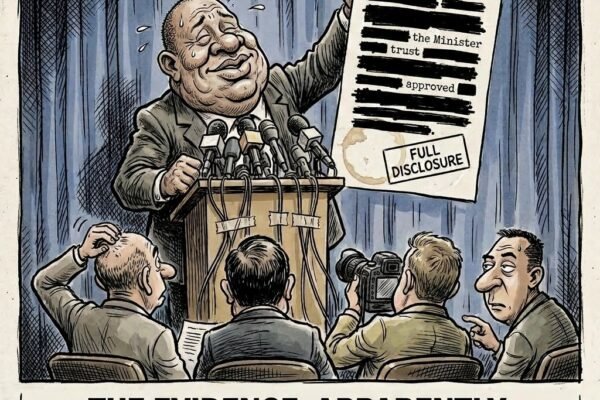
Through its Transparency Project, CSSA has submitted six PAIA applications seeking the research, crime data, legal advice, ministerial decisions and socio-economic impact assessments behind the FCAB. These include the justification for restricting self-defence licences and records of alternatives considered.
CSSA calls on Cachalia to release that evidence, report on measures to dismantle cross-border firearm syndicates and withdraw provisions removing self-defence as a valid licensing purpose.
“Government must stop the flow of weapons to criminals while recognising the danger citizens already face. South Africans deserve a policy that addresses both realities,” concludes Clark.
Stay Informed
Campaign updates, legislation alerts, and advocacy news. No spam.