South African farmers continue to live and work under conditions that would be unacceptable in any functioning state. The agricultural sector, which is the very foundation of the nation’s food security and a vital contributor to the Gross Domestic Product, remains under a sustained and violent siege. For decades, farm attacks and murders have plagued rural communities, yet the government’s response has shifted from systemic inefficiency to what can only be described as a catastrophic dereliction of duty.
The present reality is tainted by a stark paradox: farmers are tasked with feeding a growing nation under increasingly punishing conditions, yet they are left exposed, operating in a void where state protection should ultimately exist. They face a level of tactical violence that far exceeds ordinary criminal activity, yet they find themselves increasingly being ignored or brushed aside by the very government that depends on their productivity.
The realities farmers face and the lack of reliable data
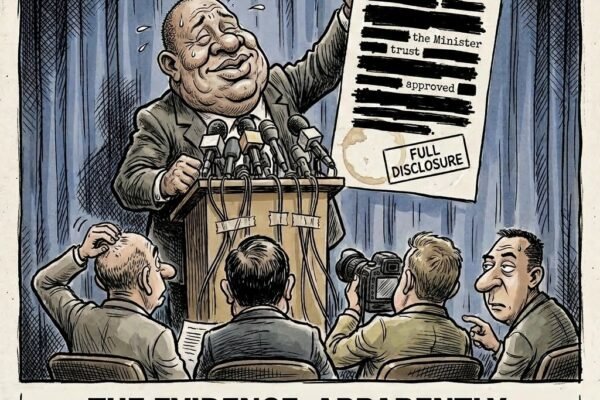
The unreliability of data connected to farm attacks outlines just how deep this failure goes. There is no single, consistently updated official dataset from SAPS that transparently tracks farm-specific crime in real time, this is because SAPS stopped publishing dedicated farm murder statistics as a distinct category in 2007. Instead, they merely incorporated farm-specific crime statistics into broader crime data. This alone can be seen as the state attempting to bury the data.
The data obtained from civil society organisations have also been under scrutiny, with methodologies being questioned. Despite the scrutiny, it also makes this data hard to verify seeing as though there is no official record to validate it against. Outlining a troublesome gap in obtaining valid and correct data.
Despite the unreliability of the data on farm attacks, the hard and fast truth is that farm attacks in any shape and form remain excessively violent and brutal, the criminals perpetrating these crimes have no regard for human life, and at face value, their lethal and torturous nature looks to be getting worse.
If one looks at the Agribook Digital 2026 Rural Crime Impact Study, the data indicates that 36% of all recorded incidents in the past year involved prolonged physical torture. Criminals are becoming more ruthless by using instruments, such as blowtorches, boiling water and power tools, to not only extract information regarding safes and valuables, but as a primary method of terror. Geographically, the crisis remains concentrated in specific red zones. According to a recent report, Gauteng experienced the highest number of farm attacks amongst the provinces, this is driven by the proximity of smallholdings to sophisticated urban crime syndicates. Limpopo holds the highest lethality rate per attack (31%), suggesting that criminals in the north are moving with a more lethal intent. The North West and Free State have seen a rise in ambush style attacks, specifically targeting farmers at their gates or during the early hours of the morning.
The states refusal to classify these as priority crimes means that SAPS does not allocate the specialised forensic or intelligence resources required to dismantle the syndicates responsible for this violence.
The human cost behind governments failure
The human cost of this security vacuum is best understood through recent incidents that underscore the government’s inability or unwillingness to secure its rural territories. These three cases from the first half of 2026 represent the new “normal” farmers are facing.
First, the West Coast Torture Case in March 2026 involved a high-profile incident in the Western Cape where an elderly farmer, Mr. Louw, was targeted in a calculated assault. The attackers bypassed advanced perimeter fencing and spent over four hours inside the farm whilst slaughtering sheep. Mr. Louw was subjected to extreme physiological and physical trauma. Despite a panic alarm being triggered early in the assault, the police response was delayed by over two hours. As reported in the Western Cape Department of Agriculture Media Statement on 12 March 2026, MEC Ivan Meyer issued a scathing condemnation of national police failure, citing a disastrous disconnect between national safety policies and the reality on the ground.
Second, the Free State Perimeter Ambush in February 2026 saw a young farming couple ambushed at the entrance to their farm. The husband was executed immediately in his vehicle, and the wife was abducted and taken into the house. Despite the activation of community radio alerts, SAPS failed to provide support until the following morning. According to the Free State Agricultural Union (VS Lanbou), incident archive of 2026, local police stations cited a lack of functional patrol vehicles and understaffing as the primary reasons for the failure to respond to an active life and death emergency.
Third, the Limpopo Paramilitary Strike in April 2026 resulted in the murder of a senior farm manager. Forensic evidence suggests the attackers utilised signal jamming technology to disable GSM based alarm systems and cellular communication. As detailed in the Limpopo Rural Safety Committee Briefing in April 2026, this indicates that farmers are no longer facing opportunistic petty thieves, but organised criminal units that possess high end technological tools which the local police are currently ill equipped to counter.
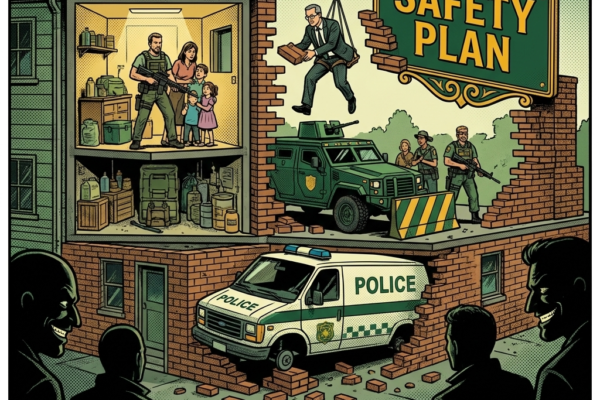
The above outlines, in clear and simple terms, that the government’s implementation of the Rural Safety Strategy, a policy designed to improve visibility, coordination and response times in rural areas, does not align with the realities our farmers face on a daily basis. The harsh reality is, the longer government fails to meaningfully enforce this policy and reform SAPS into an effective crime fighting mechanism, the policy and the safety of South Africans will never be guaranteed.
The Firearms Control Amendment Bill a piece of legislative sabotage.
The most striking failure of the government in 2026 is its active pursuit of legislation that will prevent victims from protecting themselves. The Firearms Control Amendment Bill (“FCAB”) which has faced renewed domestic pressure this year, seeks to remove self defence as a valid legal reason for owning a firearm.
In a rural context, where the nearest police station may be over 50 kilometres away, a firearm is the only viable and necessary deterrent. By pushing the FCAB, the government is effectively legislating away the citizen’s constitutional rights to life (Section 11) and right to freedom and security of the person (Section 12). Given our extremely high violent crimes statistics and the governments clear failure to protect its citizens, the FCAB will essentially be punishing the law-abiding citizen in favour of the criminals that run rampant in our country.
If the FCAB passes in its current form, farmers will be left to face organised, armed syndicates with nothing but a phone line that often goes unanswered. Furthermore, the FCAB ignores the reality that the majority of weapons used in farm attacks are either illegal imports or stolen weapons from police and military armouries. In this context, when the state fails in its primary duty, which is the protection of its citizens, it loses its credibility and legal authority to demand that farmers remain defenceless.
Denialism and the economic fallout
The government’s refusal to prioritise farm safety is not merely a logistical failure; it is a political choice. By incorporating farm-specific crime statistics into broader crime data, the government avoids the political pressure that comes with acknowledging a targeted campaign of violence against farmers. Needless to say, chanting songs such as “Kill the boer” by political parties such as the EFF, is yet another indication of the denialism present in modern South Africa.
However, the consequences of this denialism are bleeding into the economy. The Agribook Digital 2026 Study highlights a trend of farm abandonment in high-risk areas. This leads to sever job losses where rural unemployment spikes when commercial farms close, which results in further social instability. It also contributes to food price inflation because local production decreases, South Africa is forced to rely on more expensive imports. Finally, it causes a loss of investment as international agricultural investors are fleeing to safer jurisdictions, citing security risk as their primary reason for exit.
Conclusion
The statistics and real-life cases of farm attacks and murders confirm that the status quo is not only unsustainable but deeply immoral. The South African farmer remains a resilient figure, yet even the most durable community cannot withstand a sustained and unpunished campaign of violence without the protection of the state. The blood currently staining our soil is not solely the responsibility of the attackers; it is a direct reflection of a government that has watched from the sidelines, remaining passive while its food providers are systematically targeted.
By refusing to reclassify these attacks as priority crimes, like many other crime categories, the state has effectively signalled that rural lives are of secondary importance. The government’s insistence on pursuing the FCAB, which disarms the vulnerable while failing to secure its own leaking armouries, serves as the final proof of an administration that has completely abandoned its constitutional duty. This policy of denialism and legislative sabotage has created a vacuum where criminals act with impunity and the protectors of national food security are left to face these criminals alone.
The government has a choice: protect the people who feed the nation, or continue down a path of negligence that will lead to a national food and security catastrophe. Time is running out for the government to make this decision.
Stay Informed
Campaign updates, legislation alerts, and advocacy news. No spam.